

Are you having a hard time writing blog posts faster?
Maybe there’s no inspiration, and you end up taking several hours or days to write a blog post.
This experience is common with every writer, and even the best writers experience moments of slow writing to no-writing.
Even though we feel this way, we have to consistently churn out blog posts because it remains the #1 way to engage your audience and generate unique leads for your business.
Marketers who have blogs generate 67% more leads than those who do not.
When you know how to write fast, it saves you time which you can spend on your website SEO, design, or maintenance of a quality blog.

It is possible to write a blog post in under 1 hour if you follow the writing tips in below.
Research
When it comes to writing a blog post, researching on the blog post topic should be the first thing you do.
It can be fun; if you love learning new things, you can easily surf from Wikipedia to top blogs to high domain websites.
Most writers spend hours clicking from one tab to another, and they come up with nothing.
So, instead of spending hours researching, you should have topics and questions you can research on.
For example, if you want to write a blog post on “How to create content for Instagram,” come up with different queries for search engines.
Queries like:
- How to create content for Instagram
- Instagram content examples
- How to create content for Instagram 2021
- Instagram content ideas
- Types of Instagram content
- How to find content for Instagram
- Instagram content ideas for business
- How to create an Instagram strategy
- Instagram content plan template
While searching these queries, you should make your notes and drafts.

Researching the topic gives you an idea of how your outline should flow.
Therefore, it should be the first thing you do.
Outline
Creating an outline is the next step after researching Afterwards.
Instead of writing a long post with no sections, use sections to keep your readers engaged.
You should break your writing into three main parts: introduction, body, and conclusion.

The body of the post can contain several sections as you want but ensure that each section transitions smoothly from one part to the next.
Include bullet points in your outline if needed or if you’re writing a list post.
Creating an outline will take you less than ten minutes if you did your research right.
Start Writing
You’ve done your research, you have your outline, now it’s time to start writing.
The first part of your article is your introduction, and it should start with a “hook” that grabs your readers’ attention.
After the hook, you should explain what the post covers and why the post is important.
Refer to a problem or concern your audience might have and convince them that you will proffer a solution in the blog post.

You can also use facts or stats to convey importance.
When writing your introduction, be careful not to tell stories; instead, keep the introduction brief.
Writing an engaging introduction can be hard.
It takes time and requires practice.
So, you may have to take your time in this section and rewrite it severally until you’re satisfied.
After writing your introduction, the next thing is to write the body of the article.
If you’re writing to meet a deadline, you can use speaking platforms that can achieve at least 250 words a minute.
These platforms allow you to speak into a microphone while it types what you’re saying accurately.
You can have a large word count incredibly fast in a short time when you use any of these platforms.
Examples of these platforms are: Microsoft Speech, Dragon Anywhere, Google Assistant, Transcribe, Speechnotes, and SpeechTexter.
You don’t have to use these platforms if you can type fast, but it will take you longer if you have a deadline.
The conclusion of your blog post is where you summarize your thoughts in several short sentences.
Writing this part of the article shouldn’t take more than 10 minutes because it summarizes what you wrote in the blog post.
Review
This part of the system requires you to review the content that you have written, check for grammar errors and punctuation errors.
Always review after writing not while writing as this will save you more time.
You can use tools like Grammarly to check for any errors or pass it through a Microsoft Word or Google Doc spell check.
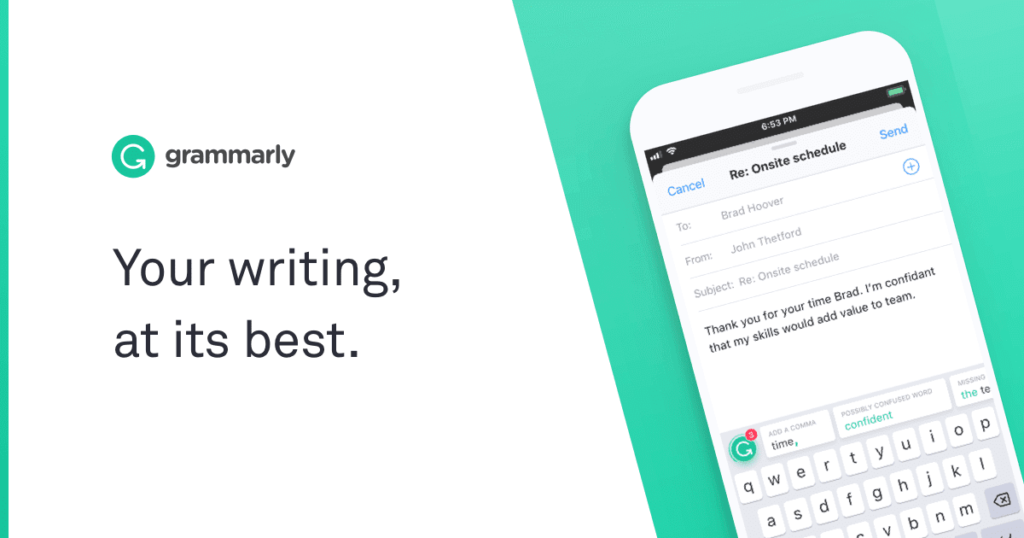
When you use these tools, you’ll be able to eliminate errors so that your post reads well and makes total sense.
After using these tools, don’t forget to read through the post once more.
Format and Post
The final step is to format your blog post, which should take about 10 to 15 minutes.
At this point, you have reviewed your content for errors, so you need to underline, bold text, use headers, and include images and videos in your post.
It’s also the stage where you break your post into different paragraphs to make it look appealing.
Once you are satisfied with the outcome, you can post the content.
Outsource
There are times when you may not be up to writing a post; you can outsource the work to someone else.
This video below shows you how to use a website called Fiverr to find the best talent.
Outsourcing can also be a faster way to write a post because the person will be sticking to a deadline.
You don’t have to outsource the entire workload if you want to be involved in the process; you can produce the text and pass it off to someone else to review, format, and publish it.
Some people have a team who they work with, which saves them time as the workload is shared amongst several people.
Before choosing this method, you have to be confident that you’ll have a great blog post returned to you without any issues.
Other Strategies

One-Writing Session
Stepping away from a task and coming back to finish it off later can be hard, especially when it comes to writing a new topic, you’re not familiar with.
That’s why it’s recommended that you write everything starting from the outline to the conclusion in one sitting.
Afterward, you can edit, proofread, and review the article later.
This may not work for you.
Some people prefer to take breaks in between their writing.

You don’t have to stick to a one-writing session; any method that works for you is fine.
Have A Goal
One way to be consistent in writing high-quality posts fast is to have a goal.
You can write a minimum of 1000 words of content in 2 hours, which will help you divide your post into a set word count for different time frames.
This makes it easier for you to write the target word count in the set time.
Know Your Productive Time
Replicating other people’s writing time will not work for you, so you need to find the most productive time of your day to write.

You can first start by writing at different times of the day and choose the one most comfortable for you.
Turn Off Notifications
Text messages, alarms, social media, or any type of notification can be a distraction when you’re writing.
So, you should put your phone’s notifications on mute or, better still, put your phone away.
This will help you write faster, as you won’t have to check your phone when it beeps.
Increase Your Typing Speed
If you learn how to type faster, you will save more time when writing.

You’ll have to practice how to type faster by setting aside some minutes to practice your typing skill every day.
Don’t Be Distracted by New Ideas
The purpose of using an outline is to keep you on track.
When you don’t stick to your outline, you may be tempted to research other ideas.
You should have a notepad beside you to jot down ideas that may pop up while writing, and when you’ve finished writing, you can review the ideas.
Use A Checklist
When writing, it’s possible to forget to include an image in a certain section or hyperlink a text.
After your final draft, create a checklist of things you’re supposed to add to the article while editing.
This will keep you focused while editing, and you won’t miss out on anything.
Write on A Deadline
If you want to write a blog post fast, you will have to be conscious of time.
After getting rid of every distraction, you need to keep your mind on track while writing your draft.

You can set a timer, but you could always reset the timer if you didn’t finish within the set time.
When you do not have so much time to complete a post, if forces you to write quickly.
The goal is to make you focus on the writing on hand.
Edit after 24 Hours
After writing a post, you may be proofreading the work as a writer and not an editor.
You need to have fresh eyes to check the post objectively.
So, if you’re not in a hurry to publish the post, and if you want a high-quality article, wait 24 hours before you edit your work for final publication.

Mistakes Can Flow
If you are editing, then your productivity will decrease.
That’s because every time you correct a mistake in the middle of writing an article, it takes up more brain power and attention to keep going on with an error-free post rather than focusing on the current task at hand.
This is why when blogging it’s best to let mistakes flow.
Freewriting
Writing daily is a good habit to develop.
It’s advised that you don’t write more than 500 words in one sitting, otherwise it can lead to writer’s block and bad writing habits when trying to complete future blog posts fast enough.

The Pomodoro Technique
The Pomodoro technique can make you a faster blog writer.
This quick-yet-effective system divides time into segments and lets bloggers know when it’s to take a break, so they never get burnt out on their writing tasks.
For example, if your 2000 word post has four 500 words sections, then start by setting 40 minutes for the first section of writing.
When that one segment is completed within its allotted time frame – 10 or 15 minutes will suffice – set another timer for 20 minutes as before.
But this next round should only be allocated 5 paragraphs worth of work per session because we’ll have already finished our previous task in record speed.
Make Use Of AI
You need to create content for your business, right?
I love and use a tool called Conversion.ai.

Conversion AI will help you write high quality copy in a fraction of the time.
You can use it for ads, emails, websites, blogs and more!
It’s perfect for anyone who needs to generate creative content quickly.
And if you’re not sure what tone to use, they have options that make it easy.
The best part is that that the AI can also save you money because it doesn’t charge by the word or hour like most writers do.
Plus there are no hidden fees or extra charges.
Just one low monthly subscription fee with unlimited access to all features!
You can learn more about it by going here.
Summary
Blogging is a great method for spreading your message, but not everyone has a good writing process or formula.
All blogs need consistent content creation, and the need to write blog posts fast is something many of us struggle with.
The next time you begin writing a blog post, the tips in this article will help you with your writing speed.